The Cook County, Illinois, Coyote Project


  Coyote Mortality  


Causes Of Death In Coyotes


Death rates are higher than most rural studies where coyotes are exposed to hunting and trapping. Nevertheless, most coyotes die before reaching their second year. This is because many pups die from a variety of causes during their first few months outside the den. Survival is fairly consistent among seasons, even during the winter. The oldest coyote in our study in an eight-year-old alpha female  More than 70 coyotes have died during the eight-year study.


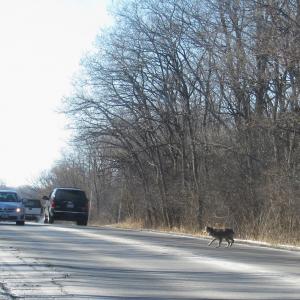
By far the most frequent cause of death for urban coyotes has been collisions with vehicles (50 to 70 percent of deaths each year)


Other causes of death included shootings, malnutrition, and disease such as sarcoptic mange and parvo virus (four coyotes died from unknown causes). Mange has been the most common disease-related
mortality, and all cases occurred post-2003.

Few of the diseases we documented in coyotes are of major importance for people or pets. Mange was the most common disease to affect survival in coyotes. Coyote-strain rabies is restricted to southern Texas, but coyotes are sometimes infected with rabies from other species. If a person is bitten by a coyote that is acting aggressive, he or she should be treated for rabies as a precaution. Anytime a person is bitten by a coyote, animal care and human health professionals should be contacted. Urban coyotes may serve as a reservoir for heart worm; about one-third of the Chicago-area coyotes were infected with the parasite.


Sarcoptic Mange


There are different types of mange with a range of severity among wildlife species.
The type of mange usually associated with coyotes is sarcoptic mange. Some facts:


◆ Mange is caused by a very small mite.
◆ The mite burrows into the skin and lays eggs.
◆ Severe cases of infection will result in hair loss and wounds from scratching.
◆ It is transmitted from one animal to another by contact or sharing dens.
◆ It can spread to pets, but that rarely happens, especially with coyotes.
◆ Mange mites are rarely a problem for humans.


How Old Is The Oldest Coyote In The Study?


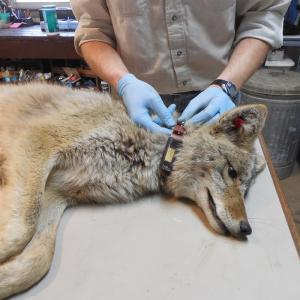
The oldest coyote in the Cook County Project, she was six years old in this photo and was still monitored as an eight year- old in 2006.

Frequency distribution for causes of mortality for radiocollared coyotes, 2000-2005. Mange occurred during 2004-2005.


The Cook County, Illinois, Coyote Project


The Ohio State University